Images Are Manipulating You. Here’s How to Take Control.
An eight-module curriculum to help you build visual literacy and change the way you understand images, culture, and yourself.
We live in a world saturated with images. They meet us from the moment we wake up, arriving through screens, advertisements, public spaces, and the constant flow of visual content that has become the rhythm of modern life. The speed and volume of these images can feel overwhelming, as if we are standing in a river that keeps rising, carrying our attention along with it.
Yet in this environment, something essential is being asked of us. We must learn not only to look, but to see. We must learn to understand what images are doing, how they shape our beliefs, and how they influence our behavior. Visual literacy is not simply an artistic skill. It is a civic responsibility, a form of cultural awareness, and a form of personal discipline. It helps us navigate a world where images often speak before words have a chance.
Visual literacy begins with intention. It is the decision to resist passive consumption and instead cultivate an active, conscious relationship with the images that surround us. It starts with a simple question: What am I looking at, and why does it matter?
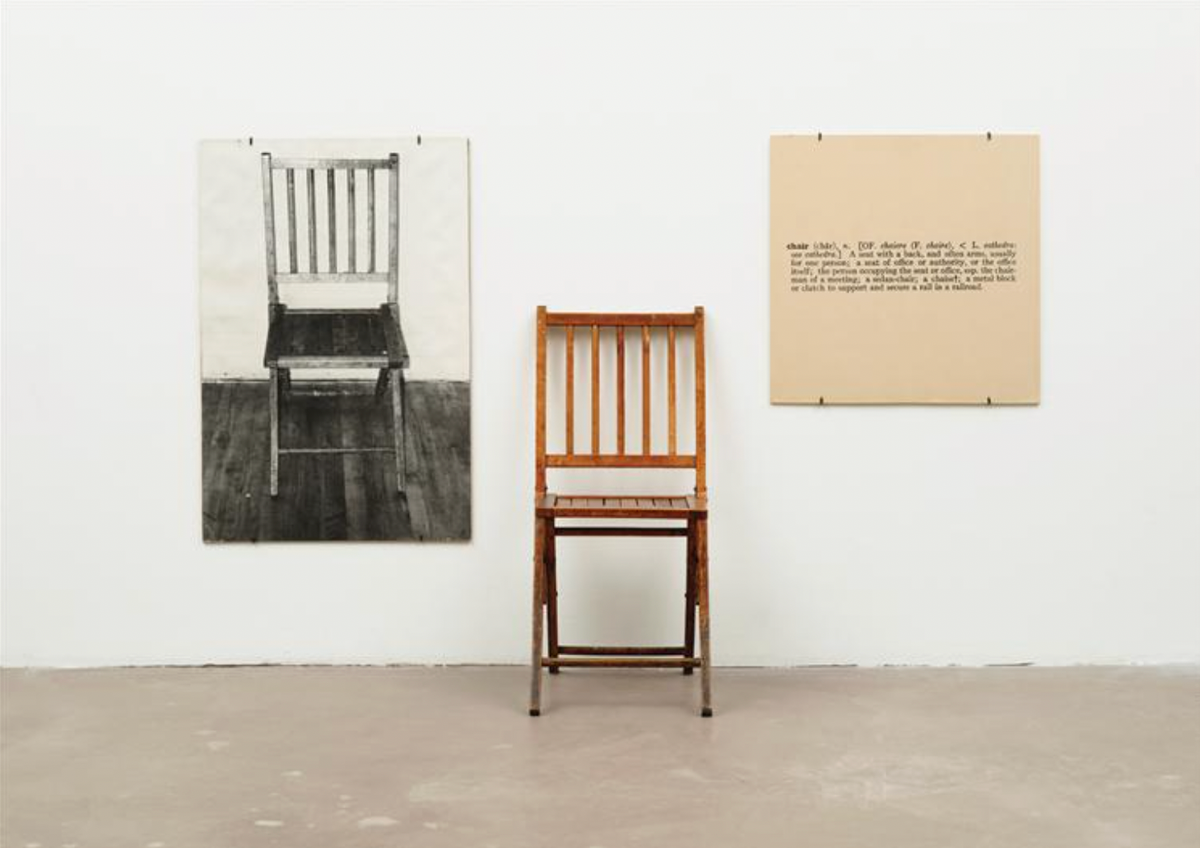
One artwork that profoundly shifted my understanding of visual culture was Joseph Kosuth’s One and Three Chairs. Encountering it dismantled a belief I held for years that being an artist was primarily about technical proficiency. Kosuth’s piece challenged that assumption in a single moment. By presenting a chair, a photograph of the chair, and the dictionary definition of “chair,” he made the concept itself the central medium. The work convinced me that art is not confined to skill or craft; it is also shaped by ideas, context, and interpretation. That realization expanded my perspective. It allowed me to think more broadly about what art can be and do. It also underscored something essential about images: they do not operate at a single level. They ask us to read, to question, and to engage with meaning beyond the surface.
With this in mind, how do we begin to cultivate visual literacy in a world saturated with images? To support that practice, I’ve developed a visual literacy curriculum included at the end of this essay, a framework for learning how to see with greater intention, clarity, and care.
A Framework for Learning to See
While my experience with One and Three Chairs helped shape my approach to visual culture, the following curriculum emerged from a broader recognition that we need structure and intention to learn how to see. With that in mind, I developed a practical framework for building visual literacy through deliberate practice. It is a simple curriculum comprising eight modules, each designed to strengthen a different dimension of seeing: attention, interpretation, context, identity, systems, and community. Alongside it, I’ve put together a reading list of books that offer deeper perspectives on visual culture, art, media, and the role images play in shaping our lives.
Together, the curriculum and the readings offer a foundation for anyone who wants to develop a more intentional, more thoughtful way of seeing. This journey unfolds in several interconnected steps.
Seven Ways to Train the Eye
1. Slow Down and Pay Attention
Slowing down might seem simple, but in a culture driven by speed, it is a radical act. When we give an image more time than habit demands, we discover details that were invisible at first glance. We notice relationships between colors, the subtlety of light, the choices an artist made, or the narrative implied by a photograph. We see the choices behind the choices.
Attention is the doorway to understanding. Without it, we drift through a world of surfaces, untouched by the deeper signals images send.
2. Recognize That Every Image Has an Intention
Images are constructed. Someone made them, shaped them, and decided what would be included and what would be excluded. They carry messages about power, identity, desire, and belonging. They reinforce, challenge, or quietly replicate norms. Understanding intention turns us from passive viewers into active participants in meaning-making.
3. Learn the Language of Images
Images speak through composition, color, scale, light, symbol, and even absence. Learning this grammar helps us understand how images persuade, comfort, unsettle, or direct. Visual literacy is less about expertise and more about curiosity, and the willingness to ask why something looks the way it does.
4. Examine Your Own Lens
We do not encounter images as blank slates. We bring our histories, biases, identities, and longings to everything we see. Two people can stand before the same image and experience it differently. When we notice what resonates, what repels, what we elevate, and what we overlook, we become more thoughtful and compassionate viewers.
5. Understand the Systems Behind Images
Today, images are shaped not only by artists and institutions but by algorithms and platforms. Generative AI produces images without lived experience. Filters reshape reality. We cannot separate images from the systems that distribute and prioritize them. Understanding these systems makes us less susceptible to manipulation and more aware of the consequences images carry.
6. Practice Visual Literacy in Community
Seeing deepens when we look together. Shared interpretation in a museum, classroom, or living room exposes us to perspectives we could not have reached on our own. Visual literacy grows through dialogue, surprise, disagreement, and collective attention. It becomes a practice of connection.
7. Treat Visual Literacy as a Form of Agency
To be visually literate is to reclaim authority over your perception. It is to recognize that while images shape culture, you can shape how you understand them. It gives you a compass in a landscape where truth, beauty, and meaning often blur. Seeing becomes an active, deliberate choice, a way of holding your ground in a world competing for your attention.
Recommended Reading
Below is a recommended reading list, organized to make exploration easier.
Foundational Texts
- Ways of Seeing — John Berger
- On Photography — Susan Sontag
- The Age of the Image — Stephen Apkon
Images, Power, and Identity
- Black Looks: Race and Representation — bell hooks
- The Black Body in Ecstasy — Jennifer C. Nash
- The Civil Contract of Photography — Ariella Aïsha Azoulay
Technology, Systems, and Algorithms
- Race After Technology — Ruha Benjamin
- Dark Matters — Simone Browne
Art History and Criticism
- Creating Their Own Image: The History of African-American Women Artists — Lisa E. Farrington
- Art & Queer Culture — Catherine Lord & Richard Meyer
Photography & Visual Archives
- Feeling the Spirit — Chester Higgins Jr.
Visual Literacy Curriculum
For those who want to engage more deeply, I’ve developed a structured visual literacy curriculum that expands on the ideas in this essay. It offers an eight-module framework you can work through at your own pace. The curriculum is available to paid subscribers.